
Choosing the right packaging can make a significant difference in how safely products are stored, handled, and delivered. A suitable cardboard box for packing should match the product's size, weight, fragility, and shipping conditions rather than being selected only by price or appearance.
For ecommerce sellers, retailers, manufacturers, wholesalers, restaurants, and growing businesses, packaging decisions can directly affect product damage, shipping costs, warehouse efficiency, and customer satisfaction. The right box protects the product while making packing and transportation easier.
This guide explains the practical factors businesses should consider when selecting boxes for different products and shipping requirements.
Why the Right Packing Box Matters
A product can pass through several stages before reaching the customer. It may be picked from a warehouse, packed by an employee, transported by road, sorted at a logistics facility, and delivered to the final destination.
During this process, packaging may experience:
Impact and vibration
Stacking pressure
Repeated handling
Compression
Changes in transportation conditions
Long-distance movement
A suitable box creates a protective barrier between the product and these external factors.
Good packaging can help businesses reduce:
Product damage
Customer complaints
Returns and replacements
Packaging waste
Unnecessary shipping costs
The objective is not to select the strongest package available. It is to select a package that provides the right level of protection for the specific product.
Start With Product Dimensions
Product dimensions should be the starting point when selecting packaging.
Measure the:
Length
Width
Height
Weight
The package should provide enough space for the product and any necessary protective material without leaving excessive empty space.
An oversized box can allow the product to move during transportation. It may also require additional filler and occupy more space during shipping.
A box that is too small can place pressure on the product and make packing difficult.
A practical approach is to maintain a range of commonly used sizes instead of trying to use one standard size for every product.
Match Box Strength With Product Weight
Not every product requires the same level of structural protection.
Lightweight products may work well with standard corrugated construction, while heavier products may require stronger board configurations.
When selecting strength, consider:
Product weight
Number of products packed together
Stacking conditions
Shipping distance
Handling frequency
Fragility
For example, a package containing lightweight apparel may have very different requirements from one carrying ceramic products or heavy hardware.
Using stronger packaging than necessary can increase costs, while insufficient strength can result in product damage.
Consider the Product's Fragility
Product fragility is just as important as weight.
A lightweight glass item may need more protection than a heavier but durable product.
Fragile products may require:
Internal partitions
Paper cushioning
Foam inserts
Protective sleeves
Bubble cushioning
Additional internal support
The purpose of internal protection is to reduce product movement and absorb shocks.
Before finalizing the packaging, businesses should test whether the product remains securely positioned inside the box.
Select Packaging Based on Shipping Distance
Local deliveries and long-distance shipments do not always require the same packaging approach.
A product delivered within the same city may experience fewer handling stages than one shipped across multiple states.
For longer shipments, businesses should consider:
Courier handling
Multiple loading and unloading stages
Stacking
Transportation duration
Road conditions
Warehouse storage
The longer and more complex the delivery journey, the more important reliable packaging becomes.
Think About Storage Before Buying in Bulk
Packaging decisions also affect warehouse operations.
Businesses purchasing packaging in large quantities should consider how the boxes will be stored before use.
Efficient storage requires:
Organized sizes
Clear labels
Accessible inventory
Appropriate stacking
Protection from moisture
Reasonable stock levels
Businesses should avoid buying large quantities of rarely used sizes simply because bulk pricing appears attractive.
Packaging inventory should be based on actual consumption and expected demand.
Use Right-Sized Packaging
Right-sizing is one of the easiest ways to improve packaging efficiency.
If a product occupies only a small portion of a large package, businesses may need additional filler to prevent movement. The larger package can also increase shipping volume.
A well-sized box can help:
Reduce empty space
Lower filler requirements
Improve product stability
Reduce storage requirements
Improve transportation efficiency
For businesses shipping hundreds or thousands of orders, even small improvements in package dimensions can produce meaningful savings.
Consider Different Products Separately
Different product categories require different packaging strategies.
Clothing and Apparel
Clothing is generally lightweight and flexible, so packaging can focus on keeping the product clean, organized, and protected from handling.
Electronics
Electronics may require stronger outer packaging and cushioning to protect against impact and vibration.
Glassware and Ceramics
These products require careful internal separation and cushioning because direct impact between products can cause breakage.
Books and Stationery
These products are generally rigid but may need protection against bending, moisture, and surface damage.
Industrial Components
Heavy or irregularly shaped products may require stronger packaging and additional internal support.
Understanding these differences helps businesses avoid using unnecessary packaging materials.
Consider the Packing Process
The best packaging should work efficiently for warehouse employees.
A package that takes too long to assemble can increase labor costs and slow down fulfillment.
Businesses should evaluate:
Assembly time
Sealing process
Label placement
Product insertion
Internal protection requirements
Final handling
For high-volume ecommerce businesses, even a few seconds saved per package can make a noticeable operational difference.
Use Different Packaging Formats Where Necessary
A complete packaging strategy does not have to depend on one format.
Retail businesses may use a paper bag for suitable lightweight customer purchases, while ecommerce orders may require stronger protective packaging.
Restaurants and food businesses may need specialized packaging designed around product temperature, moisture, grease, and presentation.
For example, a pizza box is designed specifically for pizza delivery and has different functional requirements from a general-purpose shipping package.
Selecting packaging based on application can help businesses avoid over-packaging.
Protect Products Without Excessive Filler
Internal cushioning is useful when products can move or suffer impact inside the package. However, excessive filler increases material usage and packing time.
Businesses should first determine whether the box dimensions can be improved before adding more protective material.
For fragile products, suitable cushioning should:
Keep the product centered
Prevent movement
Absorb reasonable impact
Protect vulnerable surfaces
Testing different combinations of box size and cushioning can help identify the most efficient solution.
Consider Sustainability During Selection
Packaging sustainability is becoming an important consideration for Indian businesses and their customers.
Businesses can improve packaging efficiency by:
Choosing appropriate box sizes
Reducing unnecessary fillers
Avoiding excessive material
Using recyclable paper-based packaging where suitable
Reducing product damage
Managing inventory efficiently
Sustainability should not be separated from product protection. A damaged product can create additional packaging and transportation requirements through returns and replacements.
The better approach is to balance material efficiency with reliable protection.
Compare Total Packaging Cost
The purchase price of a box does not represent its complete cost.
Businesses should consider:
Purchase price + storage + labor + shipping + damage + returns
For example, a slightly more expensive package may be more economical if it reduces product damage.
Similarly, an oversized package may have a low purchase price but increase transportation costs because of its dimensions.
Packaging decisions should therefore be based on total operational value rather than the lowest unit price.
Test Before Placing a Large Order
Testing is one of the most important steps before bulk procurement.
Businesses should test packaging with actual products and evaluate:
Product fit
Box strength
Internal movement
Stacking
Sealing
Handling
Transportation performance
Ecommerce sellers should ideally send test packages through their regular delivery network.
This can reveal problems that may not appear during warehouse testing.
Track Packaging Performance
Businesses should regularly monitor whether their packaging is actually performing well.
Useful measurements include:
Damage rate
Return rate
Packaging consumption
Average packing time
Packaging cost per order
Customer complaints
If one product category has a higher damage rate than others, the packaging should be reviewed.
This turns packaging procurement from a one-time purchasing decision into an ongoing optimization process.
How Boxish Packaging Can Support Growing Businesses
As businesses expand, packaging requirements often become more complex. Different products may require different dimensions, strengths, and formats.
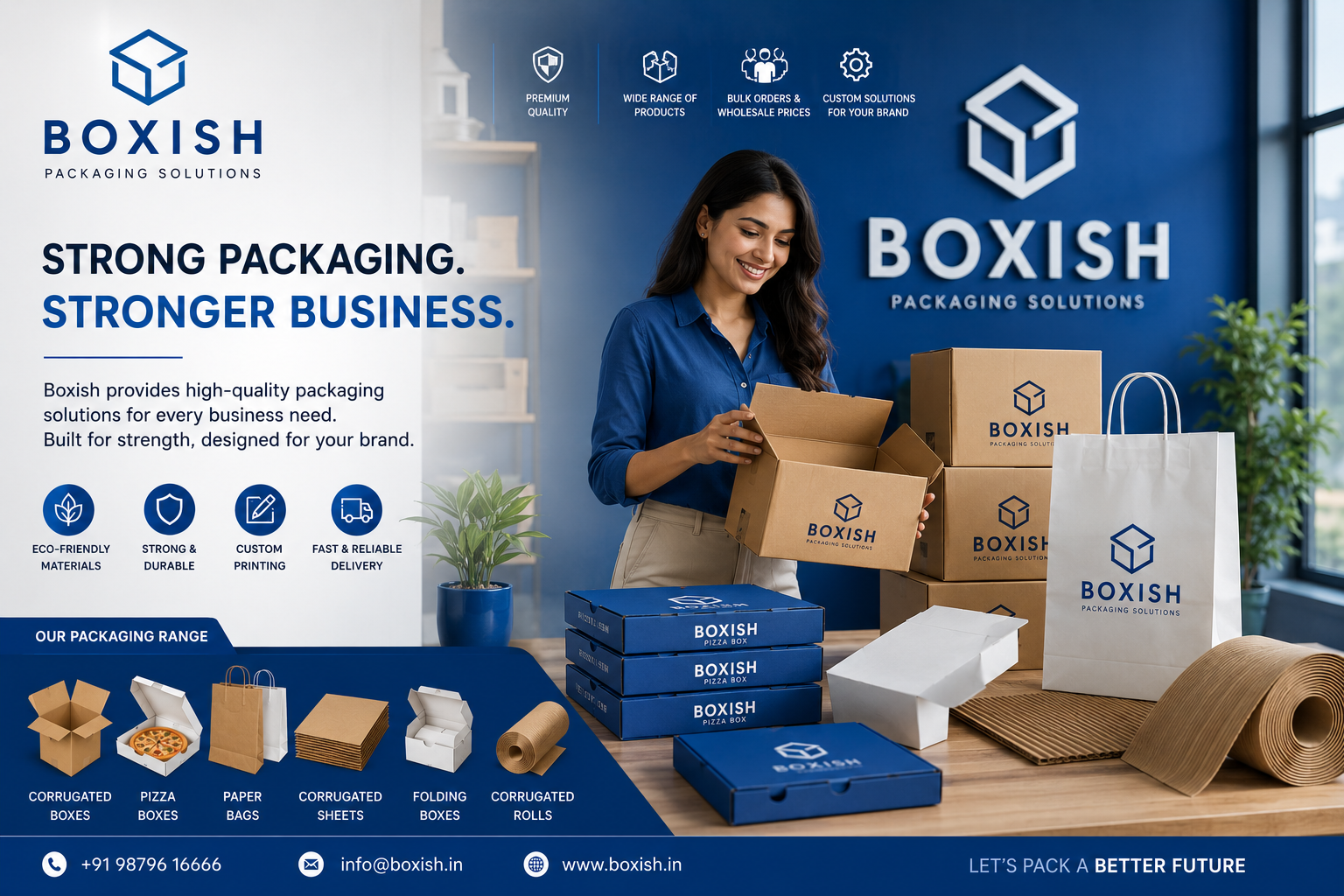
Boxish Packaging provides packaging solutions for businesses operating across retail, ecommerce, food service, and commercial sectors.
When evaluating packaging suppliers, businesses should consider:
Product consistency
Available sizes
Customization options
Order quantities
Delivery reliability
Pricing
Customer support
A dependable supplier can help businesses maintain consistent packaging quality as order volumes increase.
Practical Selection Tips
Before ordering your next batch of packaging, keep these points in mind:
Measure the product accurately.
Consider product weight and fragility.
Select appropriate box strength.
Avoid excessive empty space.
Use cushioning only where required.
Consider the complete shipping journey.
Check available warehouse space.
Test samples before bulk procurement.
Compare total packaging costs.
Monitor damage and return rates.
Review packaging requirements as products change.
Common Mistakes Businesses Should Avoid
Choosing the Cheapest Box
Price should be considered alongside strength, quality, and performance.
Using One Size for Everything
Different products often need different dimensions and protection levels.
Ignoring Product Movement
A strong outer package cannot fully protect a product if it moves freely inside.
Overpacking
Excessive material can increase cost, waste, and packing time without providing proportional benefits.
Skipping Testing
Bulk orders should be placed only after the packaging has been tested with real products.
Conclusion
Selecting the right cardboard box for packing requires businesses to consider much more than size and price. Product dimensions, weight, fragility, shipping distance, storage conditions, packing efficiency, and sustainability all influence the final choice.
The most effective packaging strategy is one that provides adequate protection without unnecessary material or operational complexity. Businesses can improve results by right-sizing packages, testing samples, monitoring damage rates, and reviewing packaging costs regularly.
Different packaging formats can also work together. A paper bag can support suitable retail applications, while a specialized pizza box can meet the needs of food delivery businesses.
By taking a practical, product-focused approach and working with a reliable packaging partner such as Boxish Packaging, businesses can build a packaging system that protects products, improves operational efficiency, controls costs, and supports long-term growth.

Write a comment ...